
News
You will find interesting news and information here as part of our commitment to educate our teams, suppliers and our clients on the importance of sustainable and environmentally sound business practices.
News | CO2, Paper Production and Sustainability - How Does It All Fit Together?
CO2, Paper Production and Sustainability - How Does It All Fit Together?
April 19 2024 By Paper Pledge paper, production, sustainability
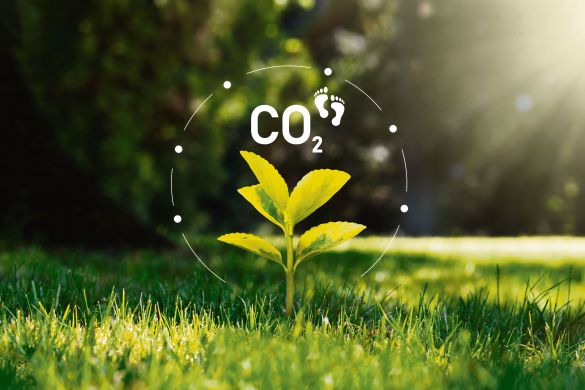
"The average tree absorbs around 10kg of CO2 per year for the first 20 years of its life."
In recent years, we've heard the term 'C02' and 'carbon footprint' more and more as our awareness of ecological issues grows. But what do these words really mean for organisations trying to minimise the impact of their operations on the environment?
Carbon dioxide (CO2) is an odourless gas found in the atmosphere. It is produced as a result of burning fossil fuels like coal, oil and natural gas. It absorbs heat radiating from Earth, and then releases this heat, sending it back to Earth. As a result, Earth is warming up.
Our Carbon footprint is the amount of carbon release into the atmosphere as a result of how you live. Recycling waste paper, car pooling and investing in green equipment that releases less carbon are ways to reduce your carbon footprint.
While too much CO2 can be problematic for the planet, it's worth noting that the gas helps green plants and trees produce carbohydrates in a process known as photosynthesis. During this process, plants take in carbon dioxide, water and sunlight and release oxygen. Humans and animals need this oxygen to survive on Earth.
Trees also play another vital role - they store CO2. It is estimated that the average tree absorbs around 10 kilograms of CO2 per year, for the first 20 years of its life. It continues to store carbon as long as the tree is living,
which can be anything from 50 years to thousands of years. This carbon is only released when the tree or the wood from the tree is burnt.
Timber is used for construction, furniture and paper manufacturing stores the CO2 absorbed during its lifetime. Given the importance of trees to humans and animals, and their ability to store the harmful greenhouse gas CO2, it's natural to think that cutting down trees to use in these industries is unacceptable.
In South Africa, we don't use any of our natural forests to make paper. The forests from which our trees are cut down to make paper in SA and in Europe are planted specifically for this purpose in managed forests/plantation.
So, the next time you pick up your local community newspaper or study your local retailers' inserts for this week's specials, remember that the paper in your hands is sustainably produced from its inception as a seed right through until its delivered to your door.