
News
You will find interesting news and information here as part of our commitment to educate our teams, suppliers and our clients on the importance of sustainable and environmentally sound business practices.
News | Sappi: Ensuring Sustainability in Every Way
Sappi: Ensuring Sustainability in Every Way
June 03 2024 By Paper Pledge paper, pledge, sustainability, clean, energy
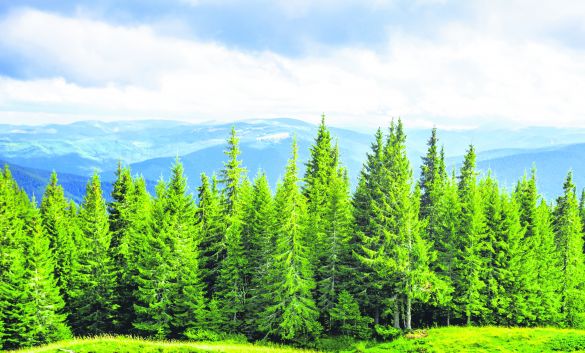
Sappi Southern Africa, which plants at least one tree for each one it harvests, has enjoyed a strategic and mutually beneficial relationship with Caxton for decades.
The company, a significant global player in the dissolving pulp market, innovates and develops new products to meet local demand for newsprint, graphic and packaging papers.
It operates five mills and has a combined production capacity of 99 000m3 sawn timber, 690 000 tons of paper, 633 000 tons of paper pulp, and over a million tons of dissolving pulp per annum.
Sappi aims to contribute to a thriving world, while ensuring long-term business success, which is why it places great emphasis on its sustainability journey and alignment with the United Nations' Sustainable Development Goals (SDGs).
From energy and water- saving processes and waste reduction efforts to the preservation of wetlands and vulnerable ecosystems, maintaining forest diversity, the reduction of harmful emissions, and educating communities on the importance of environmental protection - Sappi is on a journey to build a thriving world for people, communities and the planet, says Graeme Wild, vice president, sales and marketing for Sappi Southern Africa.
"One of our focus areas is on SDG 6: clean water and sanitation, because water stewardship is an integral part of this journey," says Wild.
He explains that Sappi's water stewardship project, established with the World Wide Fund for Nature (WWF) in 2021 in the uMkhomazi catchment - which forms part of the Southern Drakensberg Strategic Water Source Area in KZN - focuses on water governance, ecosystem restoration and resilient communities.
Sappi has a significant manufacturing and forestry footprint in the area, where its Saiccor Mill and 42 000ha of its forestry land are situated.
"When Nzinga community members requested assistance with the clearing of alien vegetation to improve access for their livestock for grazing purposes, the Sappi-WWF partnership saw this as a great fit for the work already being done in the uMkhomazi catchment to improve water security in the area," says Wild.
Ten people were identified, appointed and trained to do invasive alien clearing in the area. The training also equipped participants with skills to secure green livelihoods.
As part of the Sappi and WWF-SA's water stewardship agreement, Sappi plays an active role in supporting improved rangeland health and community cattle management
in the catchment, which also serves commercial farmers, subsistence farmers and domestic users.
Sappi and WWF worked with community members to form the eSigcalabeni Grazing Association in October 2021, in partnership with Meat Naturally, explains Wild.
Sustainability Milestones
Of its sustainability milestones achieved in the past two years, Sappi is most proud of once again achieving the highest possible rating - platinum - in the annual EcoVadis Corporate Social Responsibility ratings on April 21 last year.
"All three of Sappi's manufacturing regions - Europe, North America and South Africa - achieved this. It places the regions individually, and Sappi collectively, in the top 1% of over 90 000 companies assessed by EcoVadis," says Wild.
On July 28, 2022, Sappi also became the fifth South African company to receive approval for Science Based Targets in pursuit of its decarbonisation goals.
"The science-based carbon emission reduction target of 41.5% per ton of product was approved by the Science Based Targets initiative, a collaboration between CDP, United Nations Global Compact, World Resources Institute and the WWF."
Over R3b Purchased from Khulisa Growers
Sappi Khulisa, Sappi's flagship enterprise supplier development programme, celebrated its 40th anniversary in 2023, growing from a straightforward corporate social investment
programme into an integral, thriving division in its supply chain. Starting with only three beneficiaries, the project now provides support to over 4 000 growers through the services of 29 permanent Sappi employees experienced in responsible forestry management. Stretching from the far north of KZN to the far south and into Mpumalanga and the
Eastern Cape, over 37 000ha is managed. Since 1995, over 4.9 tons of timber, to the value of R3.03b, has been purchased from Khulisa growers.
Affordable and Clean Energy
Another of the company's focus areas is SDG 7, which is affordable and clean energy.
"Our commitment to our science-based targets of increasing our already high use of renewable energy helps to decrease carbon emissions in line with our own and the country's carbon reduction targets, thereby enhancing our competitive advantage," says Wild.
Sappi also works to achieve the aims of SDG 12, responsible consumption and production, by focusing on recycling and minimising waste.
"The Ngodwana and Tugela mills each use approximately 17% recovered paper and board. Much of this is supplied by Sappi ReFibre, our secondary fibre division, which sources used paper products from an extensive network of agents across the Southern African region as well as from waste producers.
"The recovered board and paper are used to supplement virgin fibre in the manufacturing of packaging paper grades," Wild explains.
Life on Land
Wild says that stable, resilient ecosystems are core to Sappi's business.
"This is why we are inspired to work so hard to achieve the aims of SDG 15, life on land, and enhance nature positivity in line with our focus on a thriving world.
"Of the 399 996ha of the plantations we own and lease, 261 000ha are planted.
The remainder are managed to conserve the natural habitat and biodiversity.
"This is reinforced by our use of forest certification systems*. We promote healthy ecosystems in the plantations from which Affordable and clean energy we source wood fibre - biodiversity indicators are incorporated into the internationally acknowledged, independent forest certification systems we use."
Wild explains that there are approximately 156 sites on Sappi-owned land classified as Important Conservation Areas, which add up to 38 320ha of a diverse range of habitats, including grasslands, wetlands, riverine areas, and natural forest patches.
In addition, it has proclaimed seven nature reserves on its land, covering approximately 6 350ha.
In terms of certification, as stated in its Group Sustainability Charter and Group Environmental Policy, Sappi acknowledges its environmental footprint and is committed to managing and mitigating its operations' impacts.
"The precautionary approach places the onus on Sappi to anticipate harm before it occurs and to take active steps to prevent any harm from occurring," says Wild.
It achieves this in numerous ways, including finding innovative methods for beneficiating waste; saving water and energy at every stage in production processes; and ongoing investment in research and development.